
"coffee market size"
6000 article(s) found

Kenyan Coffee quality affected by International Coffee Market Coffee prices in Kenya fell by 12%
Professional coffee knowledge exchange more coffee bean information Please follow the coffee workshop (Wechat official account cafe_style) follow the principle that to trace a type of coffee starts from its origin, then learn about Kenya first. As pictured above, Kenya is located in eastern Africa, the equator runs through its central region, and the East African Rift Valley runs from north to south. Somalia to the east and Tanzania to the south
The influence of the selection of coffee beans on the importance of defective beans according to the screening and grading criteria of coffee beans in Ethiopia
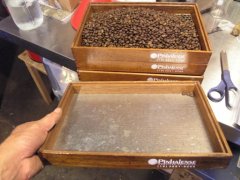
In the coffee market, the size of coffee beans is very important. On the one hand, several coffee producers define their premium by the size of coffee beans. For example, the famous Kenyan AA coffee costs more than the smaller Kenyan AB coffee. When the screening size is large, the price will increase. The main theory on the market is that high-altitude coffee grows more slowly and has higher density than low-altitude coffee.

Kenyan Coffee Regional Flavor description Kenyan Coffee targeting Japanese Market Kenyan Coffee characteristics
Professional coffee knowledge exchange more coffee bean information please follow the coffee workshop (Wechat official account cafe_style) Kenya strictly controls the quality of coffee, which is divided into AA,AB,C,E,PB,TT,T,ML,MH according to size and shape. These grades mainly distinguish the shape and size of beans, but not absolutely represent the quality of beans. Many people think that beans with larger grains

The size of the coffee market has increased to 150 billion. Coffee entrepreneurship is promising.
From the perspective of coffee drinking structure, globally, ground coffee accounts for more than 87% of the total coffee consumption, while instant coffee accounts for less than 13%. In China, instant coffee is the largest segment of the coffee consumption market, accounting for 84% of the market share. The market share of freshly ground coffee is only about 16%. Generally speaking, China's coffee market has great potential for development, and there will be

The size of the coffee market has increased to 150 billion. Coffee entrepreneurship is promising.
Recently, the number of domestic coffee lovers is increasing year by year, and these consumers are mainly concentrated in first-and second-tier cities. With the continuous development of coffee, the coffee market will sink to third-and fourth-tier cities. According to industry insiders, the overall growth of the coffee market will exceed 150 billion. Instant, freshly ground and ready-to-drink coffee all have their own consumers, while freshly ground coffee has greater potential for development. At present

What is the Kenyan NCE organization? An introduction to the auction system of Kenyan Coffee
Kenya Coffee, which is also famous in Africa, is undoubtedly the most complex coffee in the world. This complexity is multifaceted. First of all, starting from the simplest, coffee from this beautiful East African country has a huge bean shape and a variety of flavors, like colorful mosaics, showing the effects of different planting areas, varieties, and processing methods on the flavor of coffee.

China Coffee Market: Scale 70 Billion Industry Distorts Off Commercial Track
According to popular market statistics, China's coffee consumption market reached 70 billion yuan in 2015, and is exploding at an annual growth rate of 15%, reaching a trillion yuan scale by 2025. Paradoxically, the market size of 70 billion yuan, the market growth rate of 15%, such a booming industry, why does capital despise it? For this reason, the internal reference gentleman specially asked several senior capitalists for advice.

Why doesn't capital like 70 billion of China's coffee market?
According to the popular statistics in the market, the size of China's coffee consumption market reached 70 billion in 2015, and it is breaking out at an annual growth rate of 15%, reaching a trillion yuan by 2025. Paradoxically, why is capital dismissive of a thriving industry with a market size of 70 billion and a market growth rate of 15 per cent? To this end, Nei Shenjun specifically asked several senior capitalists.

Comparison between the definition of Grinding degree of five kinds of Coffee and Sugar the Grinding Particle size of various Coffee
Professional coffee knowledge exchange more coffee bean information Please pay attention to the coffee workshop (Wechat official account cafe_style) due to different brewing utensils, coffee and hot water contact method and time will be different, so the degree of grinding should be determined according to the type of brewing utensils used. In order to match the brewing method of filter paper and American coffee machine commonly used by ordinary consumers.

Starbucks "helps" Nestle Coffee, another giant increases the size of the Chinese market
The big crocodile Buck, who is now grinding coffee, has intersected with Nestl é, the ancestor of instant coffee. Starbucks announced plans to sell espresso for Nestl é home capsule coffee machines in Europe, Reuters reported. This marks that Starbucks products will also be made by Nestl é capsule coffee machines. At almost the same time on the 23rd, Nestle Coffee Center was officially in the cloud.

Australian coffee industry set off a trend of integration and operators scramble for market share
The overall size of the Australian coffee industry is more than A $4 billion, but there is not a single giant in the market at present. The strong growth of the retail coffee market has stimulated the major coffee brands to consider asset integration, expand the scale of operations and increase their market share. ACB News reported that the overall size of the Australian coffee industry is as high as A $4.3 billion, of which

How to distinguish between true and false "Golden Manning" in the market? Basic Cognition of Mantenin Coffee Bean
Professional coffee knowledge exchange more coffee bean information please follow the coffee workshop (Wechat official account cafe_style) Manning coffee flavor description of manning coffee how to drink Gold Top Mandheling and Golden Mandheling generally speaking, now on the market gold manning Golden Mandheling is the Indonesian company P.T. PA

Which brand of African Kenyan coffee beans is the best Kenyan coffee grade collection
Professional coffee knowledge exchange more coffee bean information please follow the coffee workshop (Wechat official account cafe_style) front street-Kenya coffee introduction Kenyan coffee mostly grows in the altitude of 1500Murray 2100m, harvest twice a year, to ensure that only ripe berries are picked, people

Colombia coffee defect rate standard What is Excelso grade standard Colombia coffee
Coffee in Colombia comes all the way from Venezuela. But in Colombia, the first place to grow coffee in large quantities was here in the province of Quincy, near this estate. Later, it moved to the coffee triangle near Medellin. At that time, a large number of rare trees, including wax palms, were cut down to plant coffee, which caused great damage to the environment. now he

Coffee classroom: the importance of coffee appliances commonly used coffee appliances have what role and impact?
Professional coffee knowledge exchange More coffee bean information Please pay attention to coffee workshop (Weixin Official Accounts cafe_style) Coffee utensils_coffee filter cup_coffee hand brewing pot_bean grinder It is not difficult to find coffee utensils made of various materials on the market. What effect will the difference have on coffee flavor? There are various sizes and materials on the market that can be selected according to your needs.

The concept of Fine Coffee Specialty Coffee (1)
The traditional classification of coffee beans is usually based on the classification criteria defined by the coffee producing countries, and then agreed to become common in the international market and traded under such a tacit understanding. For a long time, coffee producing countries have their own classification and evaluation criteria for coffee, which serve as the pricing guidelines in the coffee market. But slowly in recent years, coffee consuming countries have begun to demand unified evaluation criteria.

Peaceful and full-bodied coffee manor in Arusha, Tanzania, the planting market price of fine coffee bean varieties is simple.
Raw beans: raw beans are unbaked beans, which contain 11.5% fat; 11.5% moisture; 28.6% crude fiber; 4.0% minerals; 6.2% tannic acid; 1.3% caffeine; 17.0% essence; 8.1% sugar; 11.8% protein. Baked beans: baked beans containing 13.0% fat; 1.5% caffeine; 29.5% crude fiber; 2.6% moisture; 5.0% minerals

What's the right size of the bean grinder?-what's the taste of American coffee?
What is the taste of American Coffee? in 2013, the European Fine Coffee Association (SCAE) conducted a study on the grinding of coffee beans, and released a research report called Grinding Research Report in 2014, in which the common Italian bean grinders (Nuova Simonelli Mythos, La marzocco MD5, Mazzer Rob)

Introduction of Commercial Coffee Bean producing areas and Fine Coffee Bean producing areas in Colombia
Professional coffee knowledge exchange more coffee bean information please follow the coffee workshop (Wechat official account cafe_style) Colombia is rich in coffee production, has always lost only to Brazil, is the second largest coffee producer, however, between 2003 and 2007, it was overtaken by Vietnam and is now the world's third largest coffee producer, and more than 2 million people in Colombia rely on coffee production.
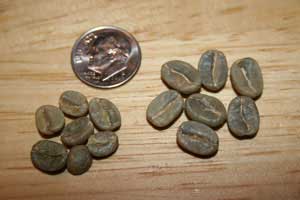
Knowledge points of Coffee Raw Bean: the concept of Fine Coffee Specialty Coffee (1)
The traditional classification of coffee beans is usually based on the classification criteria defined by the coffee producing countries, and then agreed to become common in the international market and traded under such a tacit understanding. For a long time, coffee producing countries have their own classification and evaluation criteria for coffee, which serve as the pricing guidelines in the coffee market. But slowly in recent years, coffee consuming countries have begun to demand unified evaluation criteria.